Looking for land in Rafter J? It can be a smart move if you want acreage near Durango, but buying a lot here is very different from buying in a typical subdivision. You need to think beyond the listing photos and ask how the parcel will actually work for access, utilities, approvals, and long-term ownership. This guide will help you understand what to verify before you buy so you can move forward with more confidence. Let’s dive in.
Why Rafter J Feels Different
Rafter J is best understood as an acreage neighborhood, not a standard suburban subdivision. According to the Rafter J HOA history, the neighborhood developed from the early 1970s through the late 1990s and now includes roughly 179 lots and about 165 homes.
The same HOA history notes that the area sits at about 7,500 feet in elevation, with lots that are mostly three to six acres, plus some parcels larger than ten acres. That kind of spacing can offer privacy and room to build, but it also means each parcel deserves its own review for build-readiness.
If you are comparing Rafter J to in-town Durango options, the appeal is often the balance of space and access to outdoor lifestyle. Nearby Lake Nighthorse is a notable recreation amenity, and the City of Durango identifies it as a significant recreation area located two miles from downtown Durango.
Start With Lot-Specific Due Diligence
One of the biggest mistakes land buyers make is assuming every lot in a neighborhood works the same way. In Rafter J, that can create problems because access, utilities, and site conditions may vary from parcel to parcel.
Before you finalize a purchase, it helps to review the recorded plat, HOA documents, utility status, and any county requirements tied to the site. A parcel may look buildable on paper but still need extra planning for driveway access, electrical service, or wastewater permitting.
A practical early checklist includes:
- Review the lot shape, topography, and likely building area
- Read the HOA governing documents and architectural review materials
- Confirm water service details for that specific parcel
- Verify electric service planning requirements
- Check whether the parcel uses sewer or needs an OWTS/septic system
- Understand driveway permit and inspection requirements
- Factor in wildfire mitigation from the start
Verify Water Service Early
Water is one of the first details to confirm. The Rafter J HOA history explains that the neighborhood originally relied on wells and a storage tower, and that the system was later transferred to Lake Durango Water Company, which ultimately became the Lake Durango Water Authority.
The Lake Durango Water Authority was established in 2008 to purchase and operate that system, and major upgrades have included a pipeline from Lake Nighthorse. Even with that history, you should not assume every lot has the exact same setup today.
For a vacant parcel, ask about:
- Tap ownership
- Meter location
- Any connection or utility requirements still remaining
- Whether additional steps are needed before construction begins
Those details can affect both your timeline and your build budget.
Plan Electrical Service As Part of the Purchase
Electric service should be part of your land analysis, not something you leave until after you close. In its new construction materials, LPEA says owners should coordinate with the line superintendent before trenching or clearing right-of-way.
LPEA also explains that it installs service to the metering point, while the owner is responsible for everything past the meter. Before the meter is installed, the service must be inspected and green-tagged by the Colorado State Electrical Inspector.
That means electrical planning can affect site layout, trenching, and total construction costs. LPEA also states in its residential new construction information that some new residential customers without recent prior service may need to pay a deposit of up to $250, with possible waiver options based on utility history, a credit report, or an assistance letter.
Check Sewer or Septic Requirements
Wastewater is another item you need to verify lot by lot. Buyers should confirm whether a parcel is served by sewer or whether it requires an onsite wastewater treatment system, often called an OWTS or septic system.
If an OWTS is needed, La Plata County Public Health handles a separate permit process. The county’s 2024 fee schedule lists a new-construction OWTS permit fee of $1,123.
That fee is only one piece of the picture. The larger point is that OWTS review can shape where you place the home, driveway, and other improvements, so it is worth understanding early.
Understand Driveway Access Rules
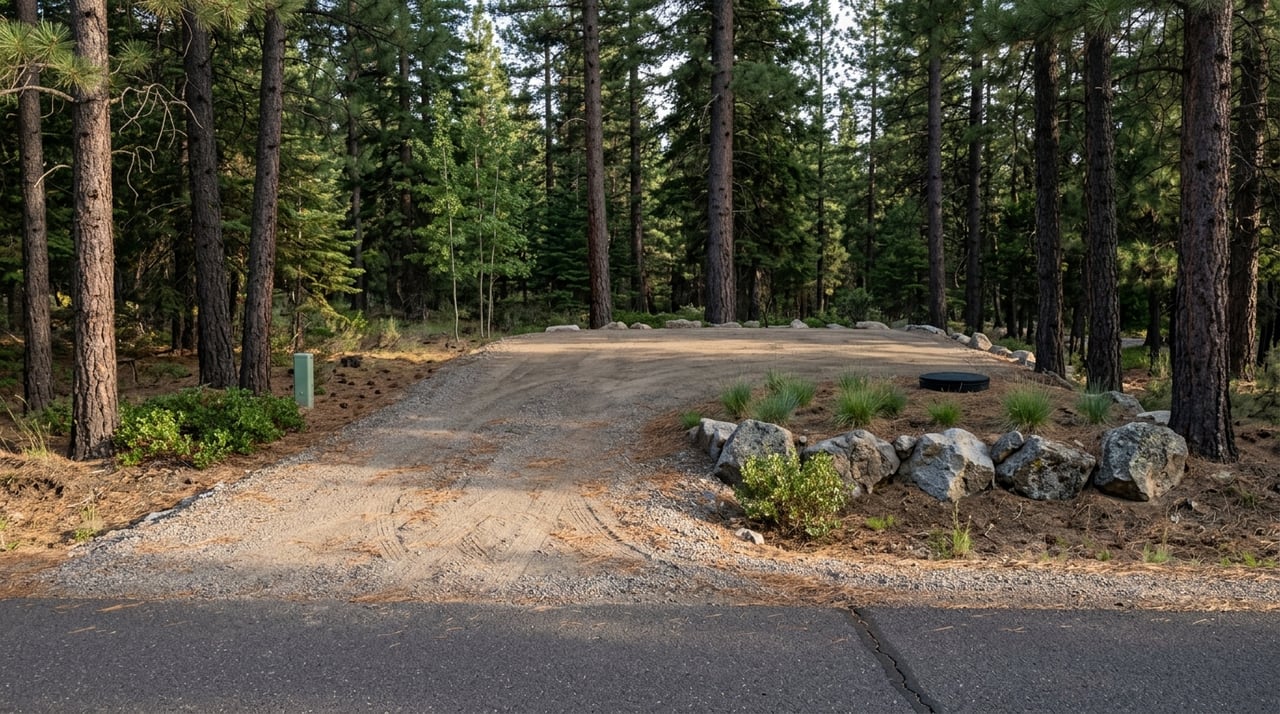
Driveway access is easy to overlook when you first fall in love with a lot. In unincorporated parts of La Plata County, driveways generally require a permit, according to the county’s driveway packet.
The same county packet says the permit must be in place before a final building permit or certificate of occupancy is issued for a new home. It also states that the driveway is not legal until final inspection is complete.
For buyers considering a sloped or wooded parcel, this matters. The county also advises applicants to discuss access with CDOT and the local fire protection district before review, which can be especially important when site conditions are more complex.
Private Roads and Winter Access
Roads are another major part of the ownership experience in Rafter J. According to the Rafter J HOA facts page, all 7.5 miles of paved roads in the neighborhood are private and maintained by the HOA.
The same page notes that the roads were chip-sealed, with lifts completed in 2016, 2019, and 2022. It also says that roughly 80% of HOA dues are spent on road maintenance, which shows how central road upkeep is to the neighborhood.
Winter access matters too. The HOA states that snow plows are called out when there are at least 4 inches of snow. If you are building or planning seasonal travel, that is useful information for both logistics and expectations.
Review HOA Rules Before Designing
HOA review is not something to leave until the last minute. The Rafter J HOA board page lists annual dues at $1,250 per calendar year, with yearly or quarterly payment options.
The HOA also provides public governing documents that include CC&Rs, bylaws, fines and ADR resolutions, and payment policy details. In addition, the architectural review page includes the review and approval process, building guidelines, a road impact fee reference, and homeowner and contractor forms.
For a land buyer, the takeaway is simple: review these materials before finalizing house plans. That can help you avoid redesign costs and keep your project moving more smoothly.
Know the Short-Term Rental Rule
If you are buying land with future rental plans in mind, this is one of the most important items to confirm. The HOA’s governing documents page states that short-term rentals are not allowed in Rafter J and defines a short-term rental as 30 days or less.
That rule can directly shape whether a parcel fits your goals. If you are buying for a primary residence, long-term hold, or custom home use, that may not be an issue. If you were hoping for short-term rental flexibility, you will want to factor that in before making an offer.
Treat Fire Mitigation As Normal Ownership
In a wooded mountain setting, wildfire planning is part of responsible ownership. The HOA says Rafter J is a nationally recognized Firewise community and supports an annual mitigation week with chipper service for slash piles through its fire mitigation resources.
The same page also points owners toward support from Wildfire Adapted Partnership, which offers wildfire-risk site visits and mitigation resources in Durango. For land buyers, this is not just a nice extra. It should be part of how you think about site planning, vegetation management, and long-term maintenance.
A Smart Buying Sequence
When you are evaluating land in Rafter J, the order of your due diligence matters. Starting with the right questions can save time, money, and frustration later.
A smart sequence looks like this:
- Review the plat, lot layout, and general build area
- Read the HOA documents and architectural review materials
- Confirm water service details for the parcel
- Verify electric planning requirements with LPEA
- Determine sewer or OWTS needs
- Review driveway access and permit requirements
- Plan for wildfire mitigation and site stewardship
This kind of process helps you move from “interesting parcel” to “realistic building opportunity.” That is especially important in an acreage neighborhood where site conditions and approvals can vary.
Why Local Guidance Helps
Buying land in Rafter J is often less about finding any available parcel and more about finding the right parcel for your goals. You may want privacy, mountain views, room for a custom home, easier access in winter, or a lot with fewer utility unknowns.
That is where neighborhood-level guidance can make a real difference. If you want help evaluating land opportunities in Rafter J or anywhere around Durango, Keith Darner can help you sort through the details and find a property that fits the way you want to live.
FAQs
What are lot sizes like in Rafter J Durango?
- According to the Rafter J HOA history, lots are mostly three to six acres, with some larger than ten acres.
Are roads in Rafter J public or private?
- The Rafter J HOA says all 7.5 miles of paved roads in the neighborhood are private and maintained by the HOA.
How does snow removal work in Rafter J?
- The HOA states that snow plows are called out when there are at least 4 inches of snow.
Can you use a Rafter J property as a short-term rental?
- No. The HOA says short-term rentals of 30 days or less are not allowed in Rafter J.
Do you need a septic permit for some Rafter J lots?
- You should verify this parcel by parcel, because some properties may require an OWTS permit through La Plata County Public Health if they are not served by sewer.
What should buyers verify about utilities for land in Rafter J?
- Buyers should confirm water service details, electric planning requirements, and whether the lot uses sewer or needs an OWTS system before finalizing a build plan.
Is wildfire mitigation important when buying land in Rafter J?
- Yes. The HOA treats fire mitigation as part of normal neighborhood operations and provides Firewise-related resources and support.
Is Lake Nighthorse close to Rafter J?
- Lake Nighthorse is a nearby recreation amenity, and the City of Durango says it is two miles from downtown Durango.